The short answer
A low pass gate is a volume control (VCA) and a low pass filter driven by one control signal. When the signal falls, the sound gets quieter and darker at the same time. In most LPGs that signal passes through a vactrol, a small light facing a light-sensitive resistor, which opens fast and closes slowly on a soft curve. That curve is why a sound through an LPG seems struck, like a drum, a marimba bar or a plucked string, instead of cut off.
ひとことで言うと
ローパスゲートは、音量を決める VCA とローパスフィルターを、ひとつのコントロール信号で同時に動かす回路です。信号が下がると、音は小さくなると同時に暗くなっていきます。多くの LPG ではこの信号がバクトロール(小さな光源と、光で抵抗値が変わる素子の組み合わせ)を通っていて、すばやく開き、柔らかいカーブでゆっくり閉じます。このカーブのおかげで、LPG を通した音はプツッと切れるのではなく、太鼓やマリンバ、はじいた弦のような「叩いた」音として響きます。
Where it comes from: Buchla and west coast synthesis
The low pass gate is Don Buchla's design. It appeared in his modular systems of the 1970s, best known as the Buchla 292 Quad Lopass Gate, and in his Music Easel. Buchla's instruments became the reference for what is now called west coast synthesis: sounds built from complex oscillators, wavefolders (which add harmonics by folding the wave back on itself) and low pass gates, rather than the east coast recipe of a bright oscillator shaped by a resonant filter and an envelope.
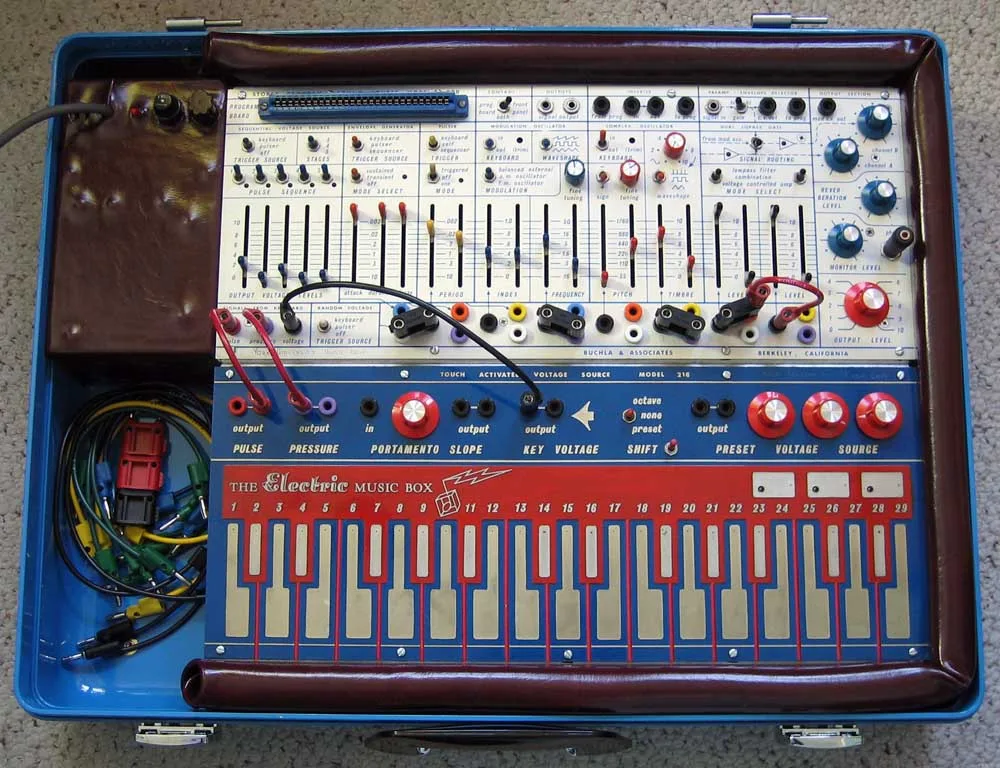
The 292 has a three-way mode switch: Gate, where it works as a VCA only; Lowpass, where it works as a filter only; and Combo (also called Both), where it does both at once. Combo is the classic LPG sound.
What is a vactrol?
A vactrol is an LED (in older units a small lamp) and a light-dependent resistor sealed in one package. More light means lower resistance. In an LPG that resistance sets the gain and the filter cutoff together. Two of its habits make the sound:
- Fast on, slow off. The light reaches the resistor in a few milliseconds, but the resistor takes much longer to return to dark, quickly at first and then more and more slowly.
- Memory. Its response depends on how hard and how recently it was lit, so hits in quick succession do not fall exactly like a single hit.
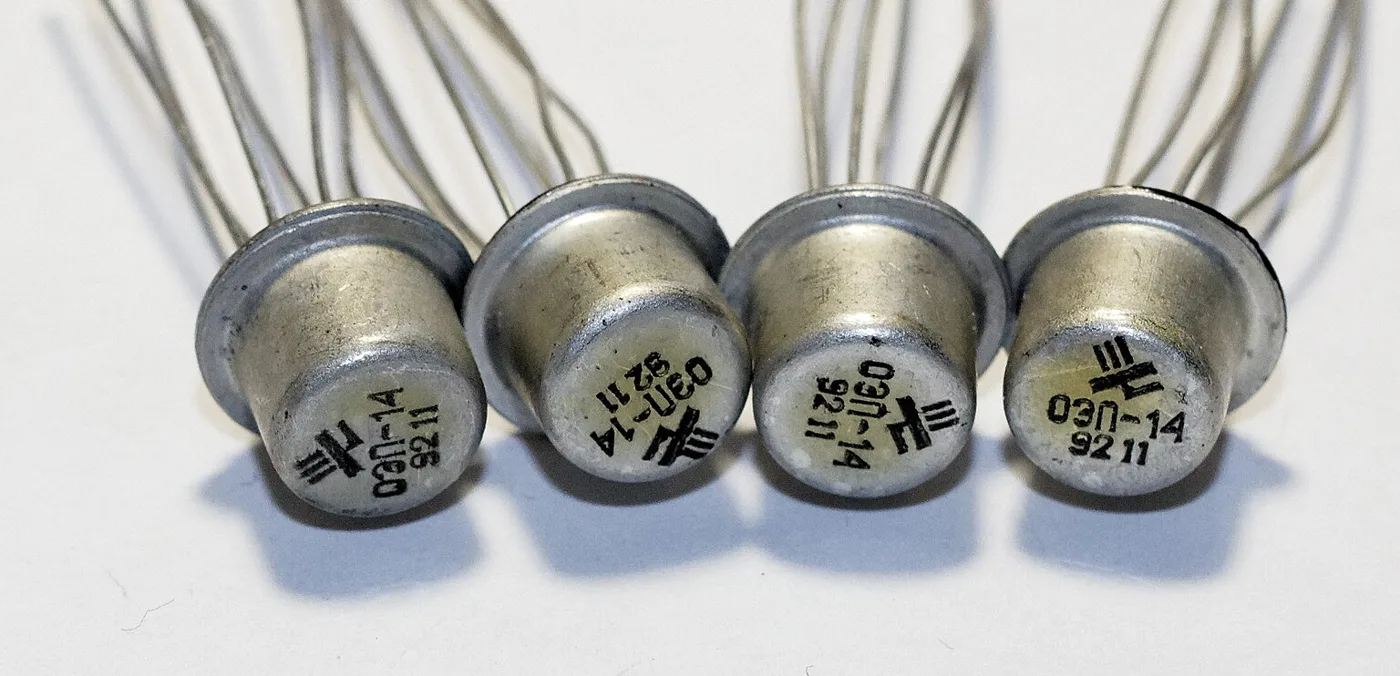
Buchla-style LPGs are usually built around the VTL5C3 vactrol or a close relative. Vactrols vary from part to part, so two channels of the same hardware rarely sound exactly alike.
Striking, or pinging
On a modular, an LPG is usually played with short triggers, sent to a STRIKE input (Make Noise's name for it) or straight into the control input; players call this pinging. Each pulse flashes the vactrol once, and the vactrol falls back on its own. Feed a sustained sound into the gate, a sine, a saw or noise, strike it in rhythm, and every pulse becomes a note with its own attack and decay. Pitched oscillators turn into plucks, marimbas or the "bongo" sound modular players talk about; noise turns into percussion.
Low pass gate vs filter and envelope
You can get close with an envelope generator, a filter and a VCA. Three things are hard to copy:
- One control moves both. Brightness and level are locked together, so the tone darkens as the note fades.
- The curve is the vactrol's, not an ADSR's. The fall slows down as it goes, and a stronger pulse lights the vactrol more, so it takes longer to go dark.
- The slope is gentle. A classic LPG filters at about 6 dB per octave, much softer than a typical synth filter. The highs go first while the lows stay in the tail, so the note dies away instead of sounding muffled. The 292's Lowpass mode and 12 dB designs such as the Make Noise MMG are steeper, and they sound snappier when struck.
How to use one in techno
In Live a strike is a MIDI note, so each idea below is a MIDI clip driving the gate.
- Plucks from a pad. Hold a chord or a pad through the gate and strike it in 16ths. Velocity sets the accents.
- Percussion from noise. White noise through a gate with a short decay gives hats and shakers that soften on their own.
- Ghost notes. Soft strikes come out quieter and darker at once, the way a drummer's ghost notes do.
- Gating a loop. Put the gate on a pad or a vocal loop and strike it with a 16th pattern. Each hit fades out instead of being chopped off.
- Round bass. A sine or a soft square with a short decay turns into a plucked, rounded bass.
Low pass gates in Ableton Live
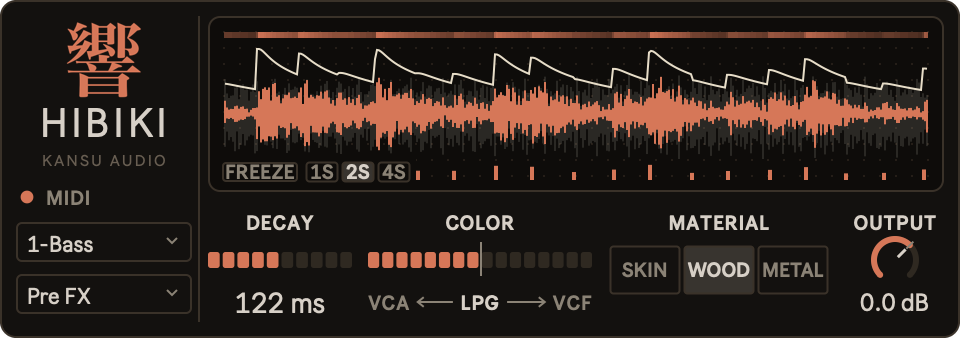
Inside Live there are no trigger cables between devices, so the natural way to strike a gate is with MIDI notes. Hibiki (M4L version), our free Max for Live device, works that way: each note-on strikes the gate and its velocity sets how hard. It takes its notes from any MIDI track, before or after that track's MIDI effects, so it can sit right after an instrument on the same track. COLOR moves from VCA through LPG to VCF like the 292's three modes, but continuously, and MATERIAL (SKIN, WOOD, METAL) changes how the gate opens and falls. It runs the same sound engine as our Hibiki plugin.
To hear the idea with a stock synth such as Analog, set the filter and amp envelopes to the same fast attack and short decay with no sustain, use the 12 dB low pass with no resonance, and let velocity raise both. It gets close, but the two envelopes are separate, so tone and level do not move as one the way a vactrol makes them.
Quick answers
- Is a low pass gate a filter?
- It is a filter and a VCA moved by one control. Some, like the 292, have a mode switch that turns one of the two off; others, like the Make Noise Optomix, always do both.
- What is the difference between an LPG and a VCA?
- A VCA changes only the level. An LPG also takes away the high frequencies as the level falls.
- What is a vactrol?
- A light source and a light-dependent resistor in one package, used as a voltage-controlled resistor with a slow, smooth release.
- Do all LPGs use vactrols?
- No. Some recent designs get a similar response without them, for example the Make Noise DXG and the Rabid Elephant Natural Gate.
LPG の起源とウエストコースト・シンセシス
ローパスゲートは Don Buchla が設計した回路です。1970 年代の Buchla のモジュラーシステムで登場し、Buchla 292 Quad Lopass Gate や Music Easel で知られています。Buchla の楽器は、のちに「ウエストコースト・シンセシス」と呼ばれる音作りの基準になりました。明るいオシレーターをレゾナンスの効いたフィルターとエンベロープで削っていくイーストコースト流ではなく、複雑なオシレーターやウェーブフォルダー(波形を折り返して倍音を加える回路)、そしてローパスゲートで音を組み立てるやり方です。
292 には 3 段階のモードスイッチがあります。VCA としてだけ働く Gate、フィルターとしてだけ働く Lowpass、その両方を同時に行う Combo(Both とも呼ばれます)。いわゆる LPG らしい音は Combo です。
バクトロールとは
バクトロールは、LED(古いものでは小さなランプ)と、光で抵抗値が変わる素子をひとつのパッケージに封じた部品です。光が強いほど抵抗は下がります。LPG では、この抵抗がゲインとフィルターのカットオフを同時に決めています。音を決めているのは、次の 2 つの性質です。
- 速く開いて、ゆっくり閉じる。光は数ミリ秒で届きますが、抵抗が元に戻るまでにはずっと長くかかります。しかも最初は速く、だんだんゆっくりになっていきます。
- メモリー効果がある。直前にどれだけ強く、どれだけ最近光ったかで反応が変わるので、続けて叩いたときの減衰は、単発の一打とまったく同じにはなりません。
Buchla 系の LPG には、VTL5C3 やその近縁のバクトロールがよく使われます。バクトロールは個体差が大きいので、同じ機種でもチャンネルごとに少しずつ音が違います。
叩く(ピング)
モジュラーでは、LPG はふつう短いトリガーで演奏します。トリガーは STRIKE 入力(Make Noise での呼び方)か、コントロール入力に直接送ります。この弾き方は「ピング」とも呼ばれます。パルスがバクトロールを一瞬光らせ、あとはバクトロールがひとりでに閉じていきます。サイン波やノコギリ波、ノイズのような持続音をゲートに通してリズムよく叩くと、パルスごとにアタックと減衰を持ったひとつの音になります。音程のあるオシレーターはプラックやマリンバ、モジュラー奏者がよく言う「ボンゴ」のような音に、ノイズはパーカッションになります。
ローパスゲートとフィルター+エンベロープの違い
エンベロープジェネレーター、フィルター、VCA を組み合わせれば、近い音は作れます。ただし、真似しにくい点が 3 つあります。
- ひとつのコントロールで両方が動く。明るさと音量が連動しているので、音が消えていくにつれて音色も暗くなります。
- カーブが ADSR ではなく、バクトロールのもの。減衰は進むほどゆるやかになります。また、強いパルスほどバクトロールが明るく光るので、暗く戻るまでに時間がかかります。
- フィルターの傾きがゆるい。クラシックな LPG のフィルターは 1 オクターブあたり約 6 dB と、一般的なシンセのフィルターよりずっとなだらかです。高域から先に消えて低域が余韻に残るので、こもった音ではなく、自然に消えていく音になります。292 の Lowpass モードや Make Noise MMG のような 12 dB の設計は傾きが急で、叩いたときによりパキッとした音になります。
テクノでの使い方
Live では一打が MIDI ノートなので、以下のアイデアはどれも MIDI クリップでゲートを叩く形になります。
- パッドからプラックを作る。コードやパッドを鳴らしっぱなしにしてゲートに通し、16 分で叩きます。アクセントはベロシティで。
- ノイズからパーカッションを作る。ホワイトノイズを短い減衰のゲートに通すと、ひとりでに柔らかく消えていくハットやシェイカーになります。
- ゴーストノート。弱く叩いた音は小さく、しかも暗くなるので、ドラマーのゴーストノートのような強弱がつきます。
- ループをゲートする。パッドやボーカルのループを 16 分のパターンで叩くと、スパッと切れるゲートではなく、余韻の残るゲートになります。
- 丸いベース。サイン波や柔らかい矩形波に短い減衰をかけると、はじいたような丸みのあるベースになります。
Ableton Live でローパスゲートを使う
Live の中にはデバイス同士をつなぐトリガーケーブルがないので、ゲートを叩くには MIDI ノートを使うのが自然です。私たちの無料 Max for Live デバイス Hibiki (M4L version) はこの方式で、ノートオンひとつが一打になり、ベロシティがその強さを決めます。ノートはセット内のどの MIDI トラックからでも、そのトラックの MIDI エフェクトの前後どちらからでも受け取れるので、音源のすぐ後ろに挿して 1 トラックで使えます。COLOR は 292 の 3 つのモードと同じく VCA、LPG、VCF を行き来しますが、切り替えではなく連続的に変化します。MATERIAL(SKIN / WOOD / METAL)ではゲートの開き方と閉じ方が変わります。中身は Hibiki プラグインと同じサウンドエンジンです。
Analog のような付属シンセで雰囲気を試すなら、フィルターとアンプのエンベロープを同じ速いアタック、短いディケイ、サステイン 0 にそろえ、レゾナンスなしの 12 dB ローパスを選んで、ベロシティで両方を上げるようにします。近い音にはなりますが、エンベロープが 2 つに分かれているので、バクトロールのように音色と音量がひとつになって動くわけではありません。
よくある質問
- ローパスゲートはフィルターですか?
- フィルターと VCA を、ひとつのコントロールで同時に動かすものです。292 のように片方だけを働かせるモードスイッチを持つ機種もあれば、Make Noise の Optomix のように常に両方が働く機種もあります。
- LPG と VCA の違いは?
- VCA は音量だけを変えます。LPG は音量が下がるにつれて高域も取り除いていきます。
- バクトロールとは?
- 光源と、光で抵抗値が変わる素子をひとつにまとめた部品です。電圧で動かせる抵抗として使われ、戻りがゆっくりで滑らかなのが特徴です。
- LPG はすべてバクトロールを使っていますか?
- いいえ。Make Noise の DXG や Rabid Elephant の Natural Gate のように、バクトロールを使わずに近い反応を得る新しい設計もあります。
Further reading参考資料
- Julian Parker, Stefano D'Angelo, A Digital Model of the Buchla Lowpass-Gate, DAFx-13
- Make Noise, Optomix manual